
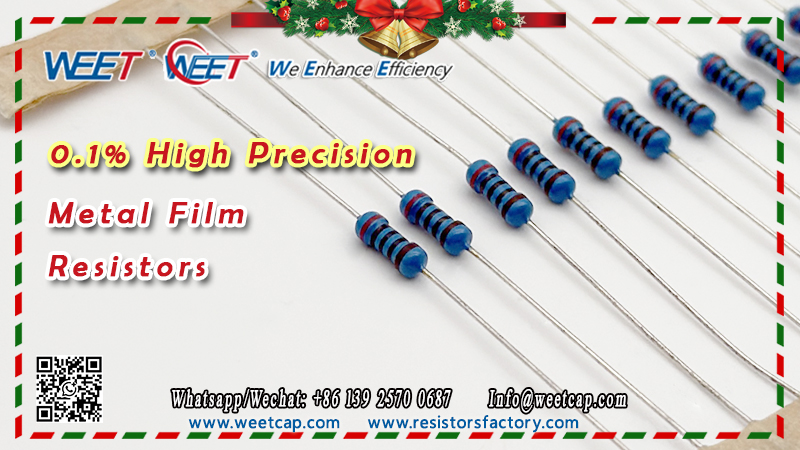
MF 0.1% High Precision Metal Film Resistors are a widely used type of resistor. Literally speaking, they are metal resistors with leads at both ends. Have you ever carefully observed the color bands on them? What do they mean? How to identify the colors of 5-band metal film resistors?
Let WEET guide you to distinguish these colorful bands!
Introduction
First of all, the color band marking of 5-Band Metal Film Resistors contains three types of information: significant figures, multiplier, and tolerance. Different colors on the resistor represent different values. Next, I will list the corresponding values of each color one by one: Black = 0; Brown = 1; Red = 2; Orange = 3; Yellow = 4; Green = 5; Blue = 6; Purple = 7; Gray = 8; White = 9
1st band = First significant figure
2nd band = Second significant figure
3rd band = Third significant figure
4th band = Multiplier
5th band = Tolerance
Take the MF 5-Band Metal Film Resistors in the figure as an example, with color bands of red, black, black, black, brown:
Significant figures: Red = 2, Black = 0, Black = 0
Multiplier: Black = 10⁰ = 1
Tolerance: Brown = ±1%
Calculation result: 200 × 10⁰ = 200Ω (with a tolerance of ±1%)
After such an explanation from WEET, isn't it easy to identify the colors of 5-Band Metal Film Resistors?
Contact us:Sales@weetcap.com
WEE Technology Published on Dec 3, 2025
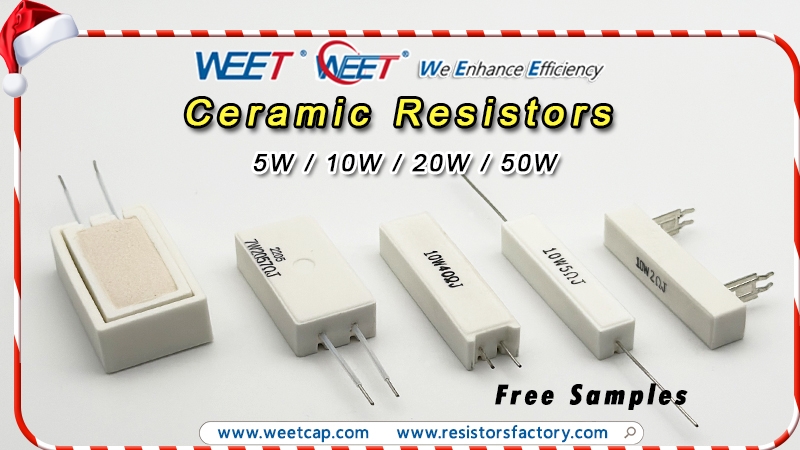
WEET offers an extensive range of ceramic resistors - How many types of ceramic power resistors have you explored?
Our cement resistor 5W / 10W / 20W / 50W includes axial cement resistors, vertical cement-cased ceramic resistors, radial cement-cased ceramic resistors, and more.
Below is a brief introduction to WEET high wattage cement resistor:
1. Key Features
High temperature resistance.
Excellent heat dissipation.
Superior stability.
2. Application Scenarios
Daily electronic devices: Air conditioners, mobile phones, LED lighting, car chargers.
Industrial & power equipment: Inverters, charging piles, machine tools, wind power converters.
Special scenarios: Satellites, nuclear magnetic resonance (NMR) equipment, radar systems.
3. Ceramic Power Resistors vs Ordinary Resistors
Ordinary Resistors (Carbon Film/Metal Film): Compact size, but poor high-temperature resistance. Suitable for low-power,
normal-temperature environments.
Ceramic Power Resistors: Relatively larger size, excellent high-temperature resistance. Ideal for high-power, high-temperature,
and harsh environments.
Contact us:Sales@weetcap.com
WEE Technology Published on Nov 28, 2025
Ceramic composition resistor widely used in industrial control, power supply equipment, automotive electronics, instrumentation and other scenarios, how much do you actually know about SQP Ceramic Resistor 5 watts?
Flameproof ceramic resistor is manufactured by winding metal alloy resistance wire around a ceramic rod, which is then placed in a refractory ceramic case and encapsulated with non-flammable cement.
Advantages of ceramic composition resistor:
Excellent heat resistance
Ability to withstand short-term overloads
Low noise
Superior explosion-proof performance
Reliable protection capability
Working principle of ceramic resistors:
The core operation of ceramic resistors 1W/2W/3W/7W/10W is based on the Joule heating effect of electric current and the resistive properties of ceramic materials. Through the synergistic effect of the ceramic substrate and conductive medium, they achieve current limiting, energy dissipation, and signal regulation.
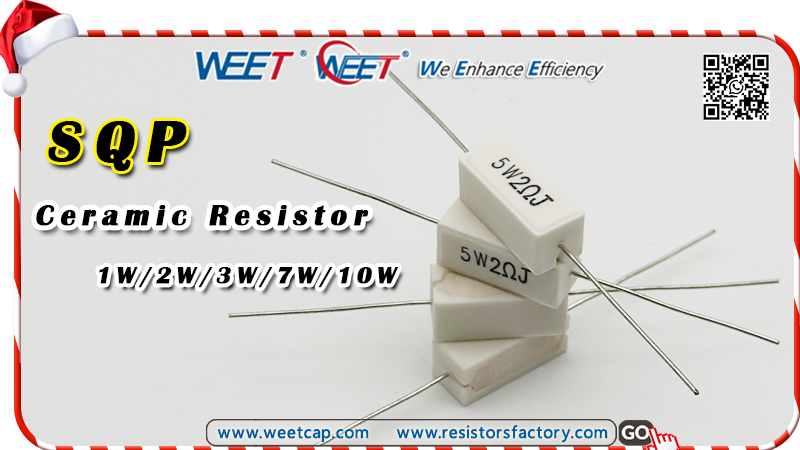
Refer to the ceramic resistor shown in the figure below.
SQP 5Watts ceramic resistor Ohm Range:
Wire Wound: 0.1Ω- 47Ω
Metal Oxide: 50Ω-100KΩ
Contact Us: Sales@weetcap.com
WEE Technology Published on Nov 27, 2025
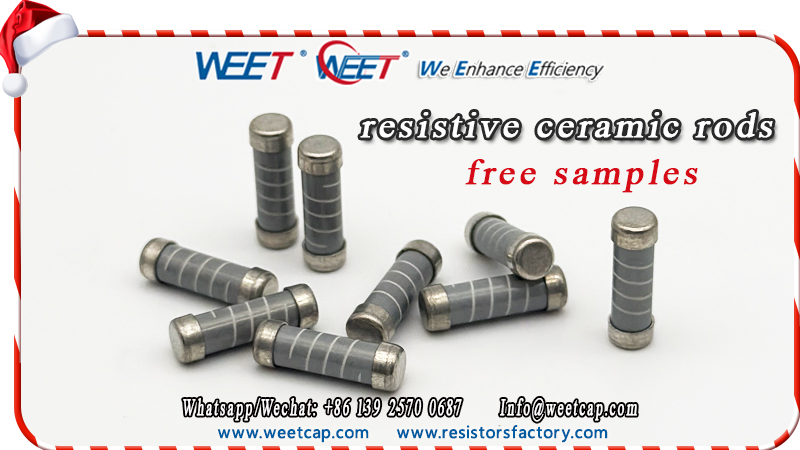
Film Rod High Power Resistors are widely used in large quantities, and their price has attracted much attention. Do you know what is the price of WEET MOF 2W resistive ceramic rods?
INTRODUCTION
In fact, the price cannot be directly defined as it is affected by numerous factors.
The price of resistive ceramic rods is closely related to multiple aspects such as raw material quality, product specifications, and production processes. Meanwhile, changes in procurement models and market environments can also cause fluctuations in their prices.
Product Specifications and Parameters: This is a key factor affecting the price, mainly including two aspects: power and resistance value.
Raw Material Quality: The quality and price of its core constituent materials directly determine the cost. Additionally, if the metal resistance wire in the rod has high purity and good high-temperature resistance, the material cost will increase, ultimately leading to a higher product price.
Production Process Level: Ordinary resistive ceramic rods are produced using mature standard processes, featuring high efficiency, low cost, and affordable prices. In contrast, high-temperature resistive ceramic rods require special processes to enhance their high-temperature resistance and stability.
Market Supply and Demand & Industry Environment: When industries such as electric vehicles and smart homes develop rapidly, the market demand for resistive ceramic rods surges. If the supply fails to keep up with the demand, the price will rise.
Procurement Quantity: For bulk purchases, suppliers will offer price discounts. Generally, the larger the procurement quantity, the lower the unit price.
SUMMARY
The above are the factors influencing the price of resistive ceramic rods. For inquiries about the price, welcome to contact WEET, and we will tailor the most favorable ordering plan for you.
Contact us:Sales@weetcap.com
WEE Technology Published on Nov 26, 2025
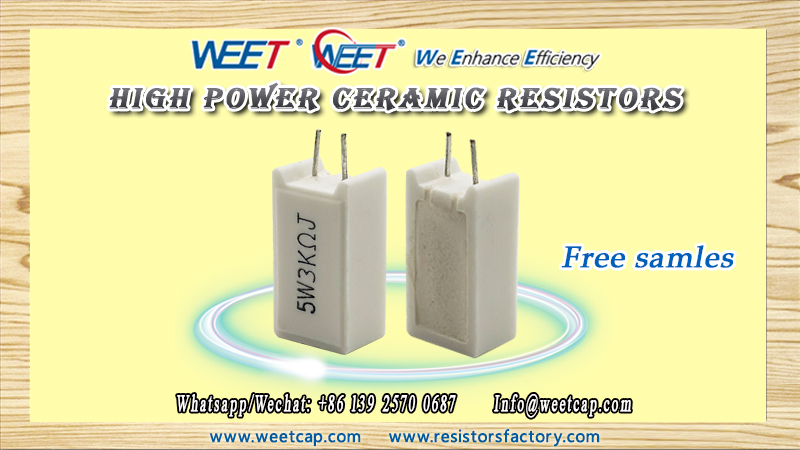
Have you ever seen a radial power resistors SQP?
High power ceramic resistors are widely used due to their core advantages such as high temperature resistance, strong stability, and moisture resistance, especially in the industrial, power, and electronic equipment fields. So, what are radial power resistors made of to achieve such outstanding performance?
Radial power resistors are manufactured by winding a metal alloy resistance wire around a ceramic rod, placing the assembly into a fire-resistant ceramic casing, and then encapsulating it with non-flammable, heat-resistant cement.
The rated powers of the resistors are as follows: 2W, 3W, 5W, 7W, 10W, 3WS, 5WS, 7WS, 10WS.
Taking the high-power ceramic resistor in the figure as a reference:
Series Number: SQM
It is 5W, 3Kohm.
Value Range ±5% (Ceramic Core): 0.1Ω - 180Ω
Value Range ±5% (Metal Oxide Film): 180Ω -100KΩ
Operating Temp. Range: -55℃ ~ +155℃
Temp. Coefficient (PPM): ±300ppm/℃
Free samples are available upon request if needed.
Contact us:Sales@weetcap.com
WEE Technology Published on Nov 21, 2025
As a type II ceramic dielectric capacitor specifically designed for high-voltage scenarios, the WEET WCA CT81 high-voltage ceramic capacitor has the following advantages:
Excellent High-Voltage Withstand Capacity.
Its rated operating voltage generally ranges from 1kV to 6kV (WEET also offers models with voltages of 10kV, 15kV, and 25kV)
Compact Size.
Most of them are in a disk shape with a compact pin layout, which saves PCB board layout space.
Stable Structure.
The electrodes of CT81 capacitors adopt the "silver infiltration firing" process, and most of their exteriors are protected by an insulating coating.
Good High-Frequency Characteristics.
Summary:
The essence of the advantages of CT81 high-voltage Disc Ceramic capacitors pulse-proof lies in that they are "tailor-made for high-voltage and medium-to-high-frequency scenarios".
Note:
Its shortcomings are weak temperature stability and it is not suitable for use in pulse circuits.
Please refer to the ceramic capacitor in the figure below.
| WCA3GM562CF110000B | WCA 4KV-562M-Y5V P=7.5mm D11*T4.5mm max |
| WCA3GM562DF110000B | WCA 4KV-562M-Y5V P=10mm D11*T4.5mm max |
| WCA3GM222CF075000B | WCA 4KV-222M-Y5V P=7.5mm D7.5*T4.0mm max |
WEET WCA Radial Type 6KV 10KV 15KVDC High Voltage Disc Ceramic Capacitors
Contact us:Wallis@weetcap.com

WEE Technology Published on Sept 15, 2025
The CT81 High Voltage Ceramic Disc Capacitors Low Loss is a type of multilayer ceramic chip capacitor (MLCC) commonly used in electronic circuits.
The CT81 ceramic capacitor is a series of national standard disc ceramic capacitors and belongs to high-voltage, high-dielectric-constant capacitors.
But do you know CT81 High Voltage Ceramic Disc Capacitors Manufacturer application fields?
High voltage power supplies, HV power supplies.
DC-DC converters, Voltage multipliers.
Other electrical appliances where high voltage is present.
Radio and TV receiver, Modems, Interfaces, TV and monitors.
Electrostatic coating, Arc spray and sputtering, Electrostatic cleaning power supplies, Ion generator power sources.
High voltage power supplies for x-ray sources and pulsed lasers: Baggage scanner, Medical x-ray, Industrial laser.
In addition to the 25KV model shown in the figure below, the best-selling models of WEET CT81 also include 2KV, 3KV, and 4KV.
Haven't found a suitable CT81 Radial type high voltage ceramic disc capacitor price supplier yet? Why not give ours a try? The quality of our CT81 ceramic capacitors is guaranteed, and we welcome your contact.
Contact us:Wallis@weetcap.com

Click on the image to view the detailed information of the CT81 ceramic capacitor.
WEE Technology Published on Sept 12, 2025
The price of CT81 High Voltage Radial Leaded Disc Ceramic Capacitor is affected by a variety of factors:
1. International trade policies and tariffs.
2. Specification parameters:
Capacitance: The larger the capacitance, the more complex the production process, and the higher the price.
Rated voltage: The higher the rated voltage, the higher-quality materials and more complex manufacturing processes are required, and the price will increase accordingly.
Precision: CT81 Disc Ceramic capacitors pulse-proof with higher precision grades require more complex manufacturing processes, so their prices are naturally higher.
3. Raw material prices: The main raw materials of CT81 High Voltage Radial Ceramic Capacitors 10KV-15KV are barium titanate and rare earth materials, which directly affect the cost of CT81 ceramic capacitors.
CT81 DC Ceramic Disc Capacitor (CG-CT81-472M) is cross-compatible with KEMET CGP Series, TDK CK45, Vishay HAZ, HAE, HAX 1 kVDC, HBZ, HBE, etc.
High voltage disc ceramic capacitor application manual:WEET-WCA-1KV-6KV-15KVDC-High-Voltage-Ceramic-Radial-Type-Disc-Capacitors
Please feel free to contact us if you have any needs!
Contact us:Wallis@weetcap.com

WEE Technology Published on Sept 11, 2025
Have you ever heard about WEET CT81 High Voltage Ceramic DC Disc Capacitors? Have you ever use it?
Below is a Detailed Specifications to 3KV Z5V 7.5mm Ceramic Capacitor in the form of a table
| Operating Temperature: | -25°C~ +85°C |
| Rated Voltage: | 1KV ~ 15KVDC |
| Capacitance Range: | 100pF – 10,000pF |
Below is a model number to 3KV Single Layer Ceramic Capacitors in the form of a table.
| WEET WCA Radial Type High Voltage Disc Ceramic Capacitors, Bulk, RoHS | |
| WEET PN | WEET DESCRIPTION |
| WCA3FM562BF095000B | WCA 3KV-562M-Y5V P=5mm D9.5*T4.0mm max |
| WCA3FM562DF095000B | WCA 3KV-562M-Y5V P=10mm D9.5*T4.0mm max |
High voltage Ceramic Capacitor 3KV 5PF 10PF 15PF 20PF 22PF 27PF 30PF 47PF 56PF 100PF 220PF 1NF 2.2NF 3.3NF 4.7NF 5.6NF 10NF 22NF.
WEET are a high-quality supplier of ceramic capacitors. WCA Radial High Voltage Ceramic Disc Capacitor Cross to KEMET CGP Sereis, TDK CK45, Vishay HAZ, HAE, HAX 1 kVDC, HBZ, HBE, HBX 2 kVDC, HCZ, HCE, HCX 3KVDC, HDE 4KVDC, HEE 5KVDC, HFZ, HFE 6KVDC. If you have any needs, please feel free to contact our team at any time!
Contact us:Wallis@weetcap.com
Click on the image to view more detailed information about the CT81 High Voltage Ceramic DC Disc Capacitors.

100pF (101) 3kV High-Voltage Ceramic Disc Capacitor
WEE Technology Published on Sept 9, 2025
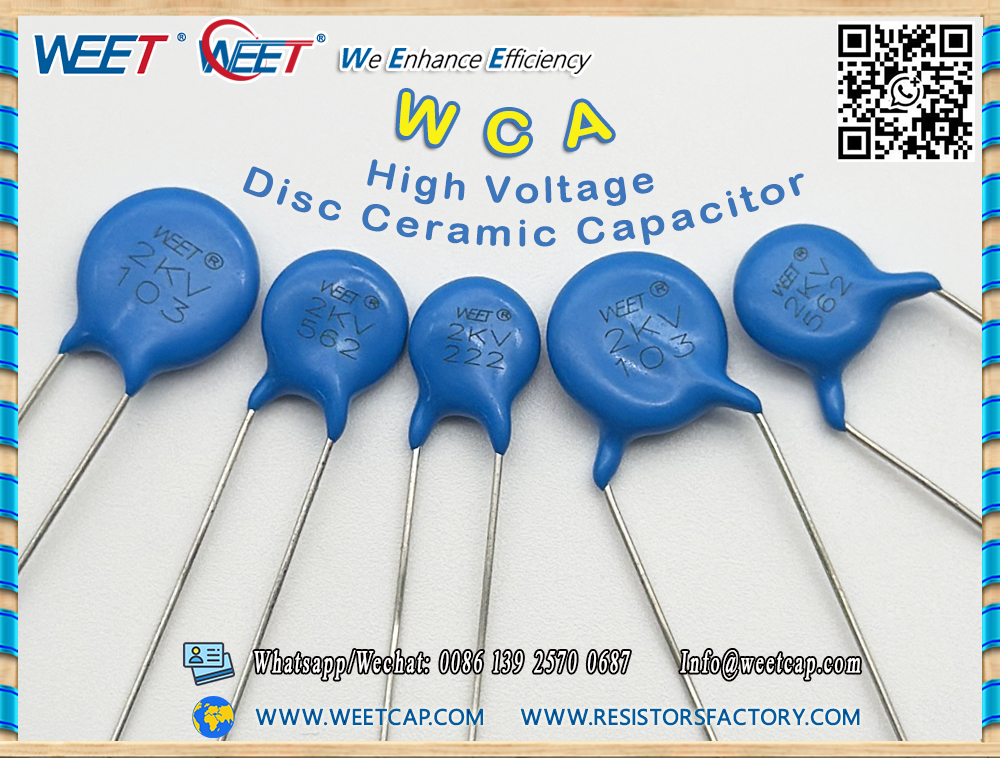
WCA radial type high voltage disc ceramic capacitor is a type of capacitor that uses ceramic as the dielectric, features a radial lead structure, and is suitable for high-voltage circuits.
WCA High Voltage Disc Ceramic Capacitor performance characteristics:
High voltage resistance: Disc Type Capacitors With Lead High Voltage Ceramic Capacitors adopts special ceramic dielectric materials, can withstand relatively high voltages, and is suitable for various AC and DC high-voltage circuits.
Good frequency characteristics: It has excellent frequency characteristics and can maintain stable performance in high-frequency circuits.
Superior charge-discharge performance: It can charge and discharge quickly, making it suitable for circuits that require rapid energy storage and release.
Strong environmental adaptability: It has a wide operating temperature range, along with high insulation resistance and low leakage current, enabling stable operation under different environmental conditions.
WCA Radial high voltage ceramic disc capacitor pdf:WEET-WCA-1KV-6KV-15KVDC-High-Voltage-Ceramic-Radial-Type-Disc-Capacitors
| WEET WCA Radial Type High Voltage Disc Ceramic Capacitors, Bulk, RoHS | |
| WEET PN | WEET DESCRIPTION |
| WCA3DM222BE085000B | WCA 2KV-222M-Y5U P=5mm D8.5*T3.0mm ma |
| WCA3DM103BF110000B | WCA 2KV-103M-Y5V P=5mm D11*T3.5mm max |
| WCA3DM103DF110000B | WCA 2KV-103M-Y5V P=10mm D11*T3.5mm ma |
| WCA3DM562BF095000B | WCA 2KV-562M-Y5V P=5mm D9.5*T3.5mm max |
| WCA3DM562DF095000B | WCA 2KV-562M-Y5V P=10mm D9.5*T3.5mm max |
Contact us:Wallis@weetcap.com
WEE Technology Published on Sept 8, 2025