
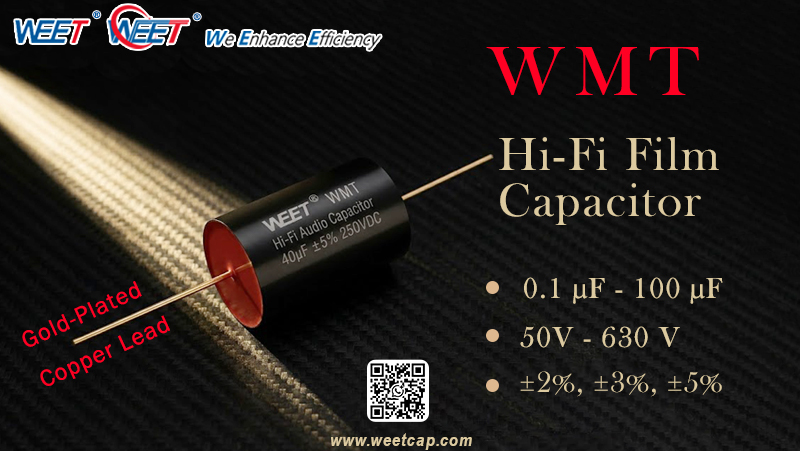
What Makes the WEET WMT Hi-Fi Film Capacitor Different? Let WEET tells you.
A Hi-Fi Film Capacitor is an important component in audio circuits, where low signal loss and stable electrical performance are essential.
The WEET WMT series is designed for high-quality audio applications, combining metallized polypropylene film technology with carefully designed leads and low-loss characteristics.
Low-Loss Performance for Audio Applications
The WEET WMT features a very low dissipation factor, low equivalent series resistance (ESR), and low inductance. Its dissipation factor is specified at ≤0.0010 at 1 kHz, helping minimize energy loss during operation. The series also features a quick transient design and excellent handling of high-current audio pulses.
Silver and Gold-Plated Copper Leads
One distinctive feature of the WMT series is its silver- and gold-plated tinned copper wire lead options. These leads offer good solderability and reliable electrical connections, making the capacitor suitable for audio equipment assembly and long-term use.
Flexible Specifications for Different Audio Circuits
The WEET WMT series offers capacitance values from 0.1 μF to 100 μF, rated voltages from 50 VDC to 630 VDC, and capacitance tolerances of ±2%, ±3%, and ±5%, depending on the specification. This range provides flexibility for different circuit designs, including speaker crossovers, coupling, decoupling, and filtering applications.
Visit the WEET WMT product page for more details or contact WEET to discuss your application requirements.
Choose WEET WMT for Your Audio Projects
With low-loss characteristics, carefully designed lead options, and flexible specifications, the WEET WMT series is a practical choice for audio equipment manufacturers and crossover designers seeking a reliable Hi-Fi Film Capacitor.
Are you curious about what factors affect WEET WMTaudio grade MKP capacitors price? Click this link to learn: WEET-What Factors Affect WEET WMT Audio Grade MKP Capacitors Price?
WEE Technolgy Company Limited Published On Oct 23, 2026
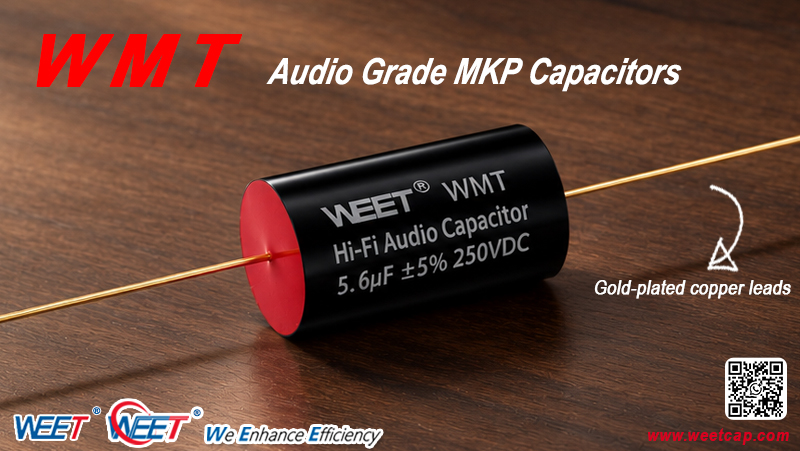
WEET WMT Audio grade MKP capacitors are popular among audiophiles for speaker crossovers and other audio applications. But what affects the audio grade MKP capacitors price? WEET explains seven key factors below.
7 Factors Affecting WMT Audio Grade MKP Capacitors Price
1. Capacitance
Larger capacitance values generally require more materials, resulting in higher costs. For example, 10µF capacitors are usually more expensive than 1µF capacitors with the same voltage rating.
2. Voltage Rating
Higher voltage ratings generally require stronger insulation performance, which may increase production costs.
3. Material Quality
The quality of polypropylene film, electrodes, and leads affects cost.
WEET WMT Audio Grade MKP Capacitors feature gold-plated copper leads, offering a distinctive material choice for audio applications.
4. Capacitance Tolerance
Tighter tolerances, such as ±1%, generally require more precise manufacturing and quality control than ±5%, potentially increasing the price.
5. Electrical Performance
Parameters such as low ESR, low DF, and low inductance can affect product cost. Buyers should compare specifications when evaluating audio capacitors.
6. Manufacturing Process
Film winding, lead welding, encapsulation, and electrical testing all contribute to production costs. Consistent quality control is essential for reliable performance.
7. Order Quantity
Larger orders may reduce unit prices, while small batches and customized specifications may involve additional costs. WEET supports B2B inquiries for audio capacitors and OEM/ODM requirements.
Conclusion
WMT audio grade MKP capacitors price depends on specifications, materials, performance, and order quantity. Contact WEET to discuss WMT capacitor specifications, request samples, and obtain a quotation for your project.
Contact Whatsapp WEET Products WEET YouTube
WEE Technology Company Limited Published On Oct 16, 2026
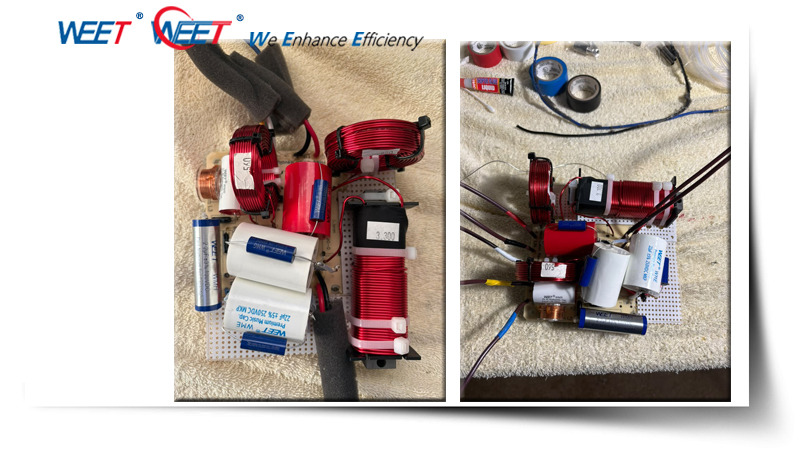
Can WEET audio capacitors improve speaker sound quality? The answer is definitely yes. Let's take a look at how our customers have provided feedback!
1. Customer Background
Our customer from US recently purchased WEET WMH/WMG/WME/WMR Audio Capacitors for upgrading a pair of speakers and upgrading my CD player.
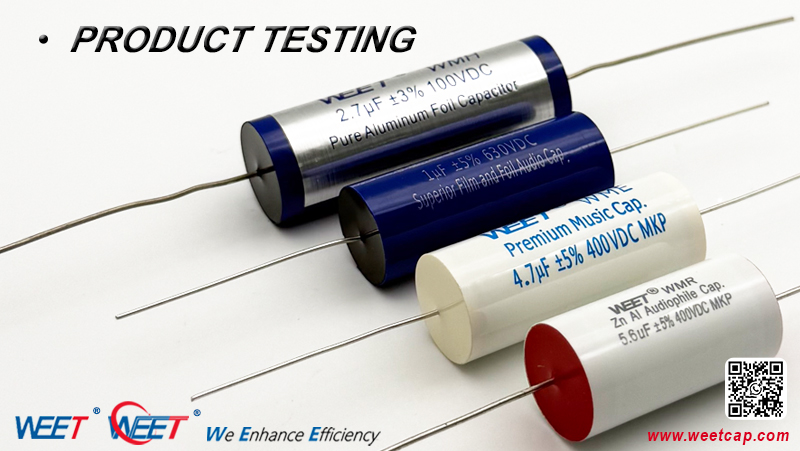
2. Product Testing List
WEET WMH 100V 200V Pure Aluminum Foil and Polypropylene Film Capacitors
WEET WMR to Replace Cross Cap Metalized Polypropylene Zinc and Aluminum Foil Capacitors.
3. Customer Feedback
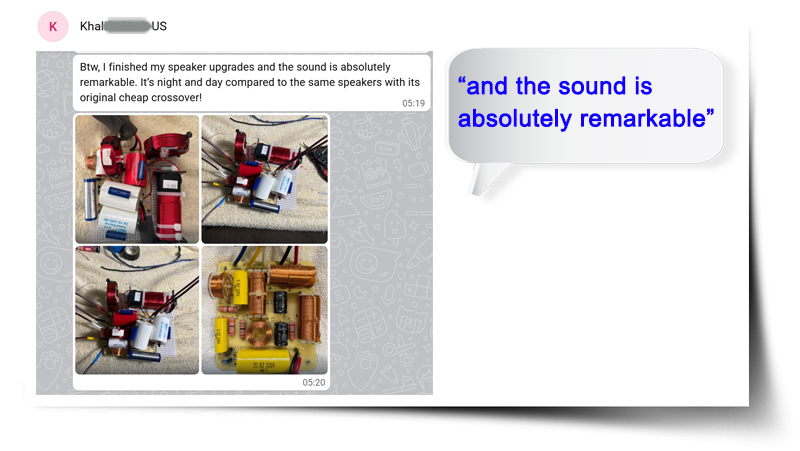
"Btw, I finished my speaker upgrades and the sound is absolutely remarkable. It's night and day compared to the same speakers with its original cheap crossover!”
--Khalifa from US
4. Looking for Reliable Audio Electronic Components Supplier?
WEET offers a selection of film capacitors and aluminum electrolytic capacitors for audio applications, including speaker crossovers and amplifiers. Contact us for free samples, product testing, and customized OEM solutions for your long-term projects.
WEE Technology Company Limited Published On Oct 9, 2026.
Dear Client,
Please be informed that our office will be closed for the Mid-Autumn Festival from September 25th to 27th, 2026 and National Day Holiday from October 1st to 7th, 2026.
Normal business operations will resume on October 8th, 2026
1. Introduction
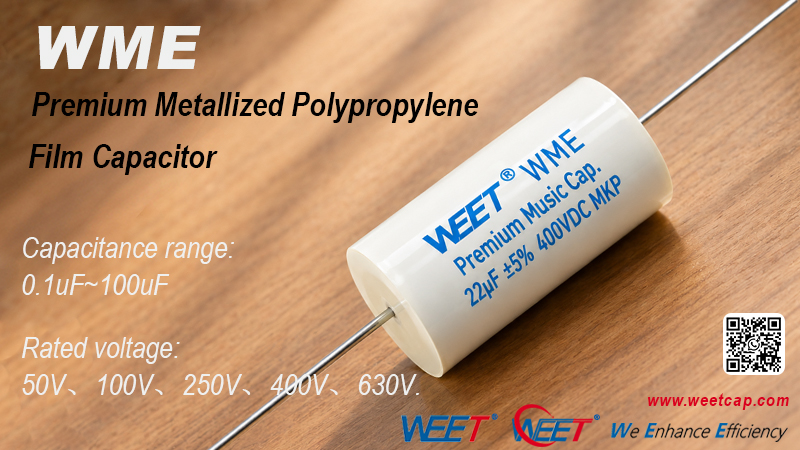
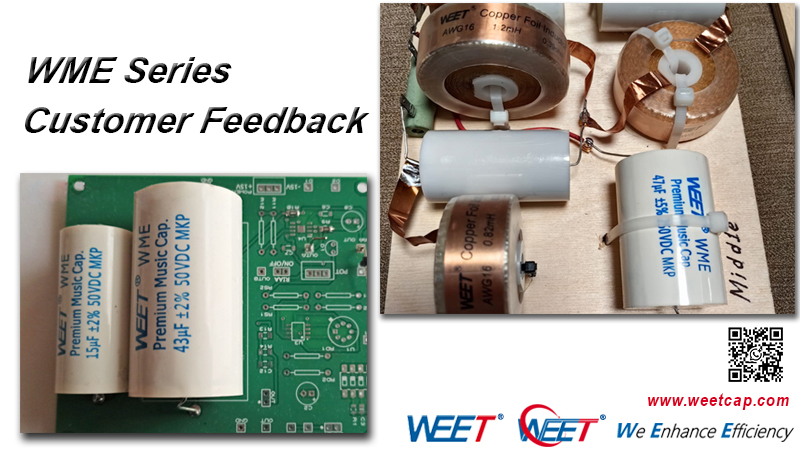
The customer was interested in the WME film capacitor and wanted to evaluate its performance through actual testing.
After receiving the samples, the customer carried out testing to check whether the capacitor met the required specifications and performance expectations.
2. Customer Feedback
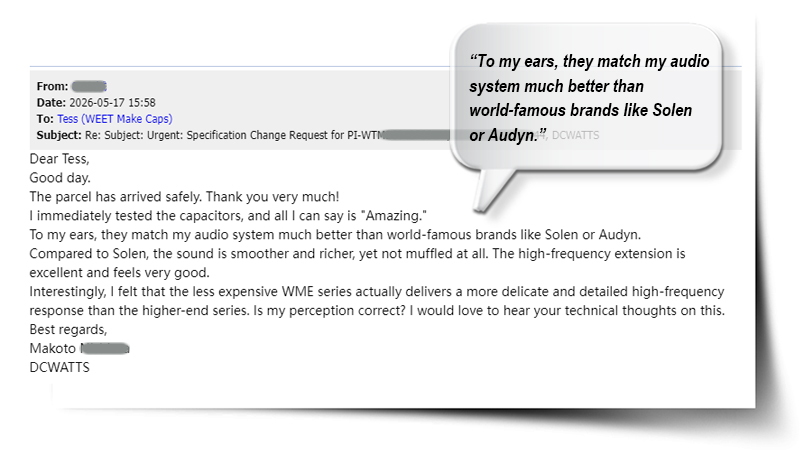
"I immediately tested the capacitors, and all I can say is "Amazing."
To my ears, they match my audio system much better than world-famous brands like Solen or Audyn.
Compared to Solen, the sound is smoother and richer, yet not muffled at all. The high-frequency extension is excellent and feels very good.”
--Makoto
Click here to see more reviews:
WEET-What Our Customer Says About WEET WMH Audio Capacitor: Real Feedback?
WEET-Can WMG Aluminum Foil And Film Capacitors Improve Speaker Crossover Performance?
3. WME Film Capacitor Features
The WEET WME axial metallized polypropylene film capacitor uses vacuum-metallized polypropylene film as both the dielectric and electrode.
The electrode is connected through tinned copper wires, and the capacitor is sealed with 94V-0 epoxy resin for reliable insulation and protection.
The WME series offers:
Capacitance range: 0.1μF–100μF
Rated voltage: 50V, 100V, 250V, 400V, and 630V DC
Capacitance tolerance: ±1%, ±2%, ±3%, and ±5%
Quick transient response
Very low dielectric absorption
Very low dissipation factor
Very low ESR and inductance
4. Conclusion
Customer testing is an important way to evaluate the actual performance of a film capacitor. The positive feedback on WME demonstrates its stable performance and consistent quality.
If you are looking for a film capacitor with precise capacitance and customized specifications, WEET can provide WME samples for testing and OEM/ODM support.
WEE Technology Company Limited Published On Sept. 18, 2026
1. Customer Background
Our customer from Malaysia purchased WEET WMG Aluminum Foil and Film Capacitor for coupling function in guitar amplifiers.

2. Product Testing
WMG 0.022uF 630V ±5% OD*L8*24mm Axial RoHS
WMG 0.047uF 630V ±5% OD*L12*24mm Axial RoHS
WMG 0.1uF 630V ±5% OD*L12*30.5mm Axial RoHS
3. Customer Feedback
"Very clear/detailed, a bit warm, but not as woolier/vintage sounding as polyester, as expected.
The less hi fi sound is preferred for guitar amps, usually.
But this is to be expected, and your caps perform quite well against what we currently use.
Perhaps, with more burn in, the performance will shine better.
I will also test your other caps."
--Nik from Malaysia


4. Conclusion
WEET WMG Aluminum Foil and Film Capacitors are constructed using separate layers of premium foil and polypropylene films, rather than the vapor deposited metallized film used by most other manufacturers.
Looking for a reliable audio capacitor supplier for your next project? Contact WEET to learn more about the WMG series and customization options.
WEE Technolgy Company Limited Published On Sept 11, 2026
1. Customer Background
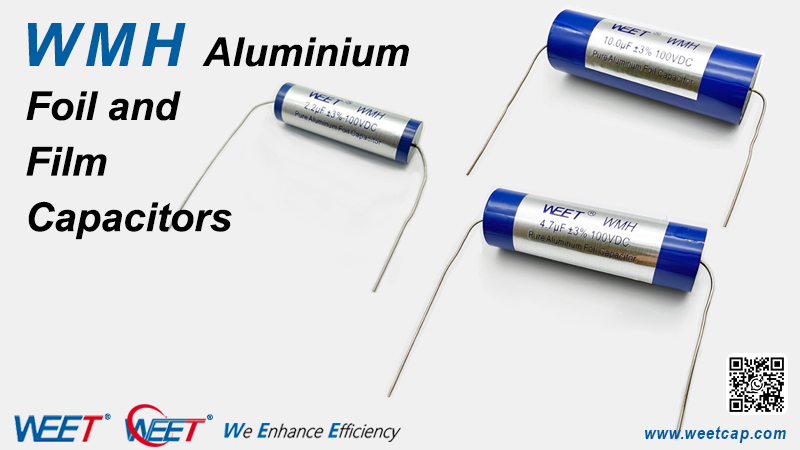
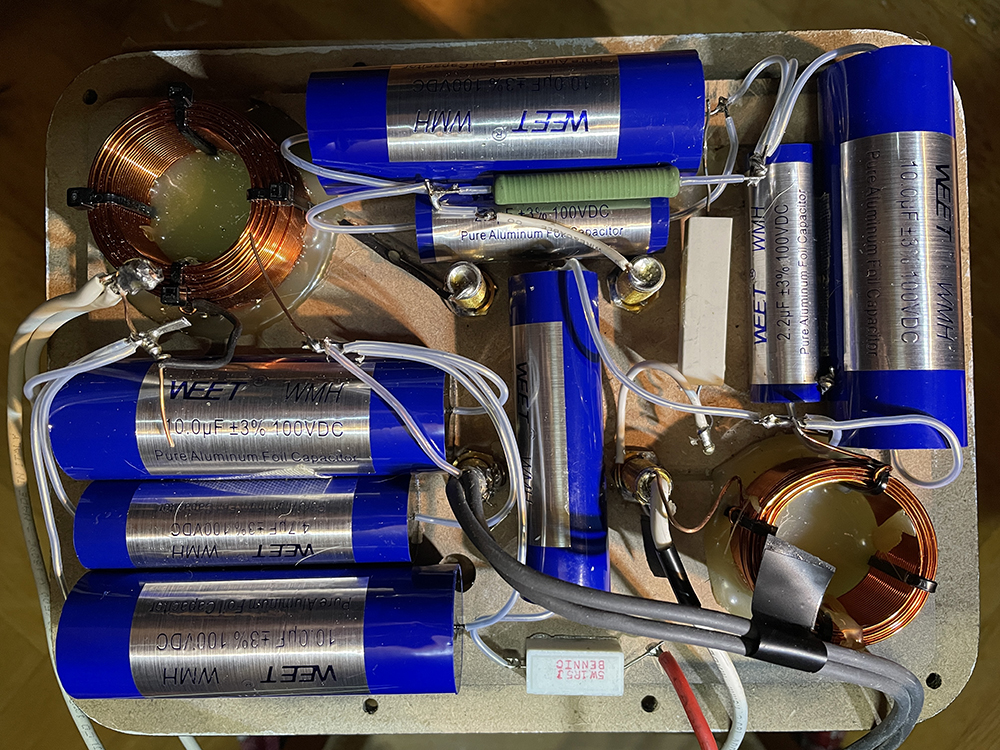
Our customer from Germany recently purchased WEET WMH Audio Capacitors to replace the original capacitors in the speaker crossover of the Claro 6.2 by Sonor Audio.
2. Product Testing
Product Testing:
10.0uF 100V +/-3% 28x85mm Axial RoHS
4.7uF 100V +/-3% 21x75mm Axial RoHS
2.2uF 100V +/-3% 17x58mm Axial RoHS
3. Customer Feedback
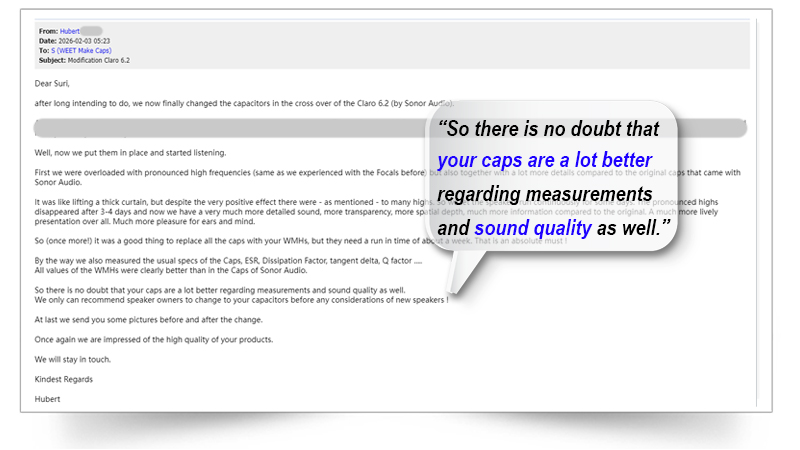
"So (once more!) it was a good thing to replace all the caps with your WMHs, but they need a run in time of about a week. That is an absolute must!
By the way we also measured the usual specs of the Caps, ESR, Dissipation Factor, tangent delta, Q factor ….
All values of the WMHs were clearly better than in the Caps of Sonor Audio.
So there is no doubt that your caps are a lot better regarding measurements and sound quality as well.
We only can recommend speaker owners to change to your capacitors before any considerations of new speakers!"
--Hubert From Germany
4. Looking for Reliable Electronic Components Supplier?
Looking for reliable audio capacitors for speaker crossovers, amplifiers, or other audio applications? WEET provides a wide range of film capacitors and aluminum electrolytic capacitors for testing, free samples, and long-term OEM projects.
Contact us to discuss your requirements or request samples.
Contact Whatsapp WEET Products WEET YouTube
WEE Technology Company Limited Published On Sept 4, 2026
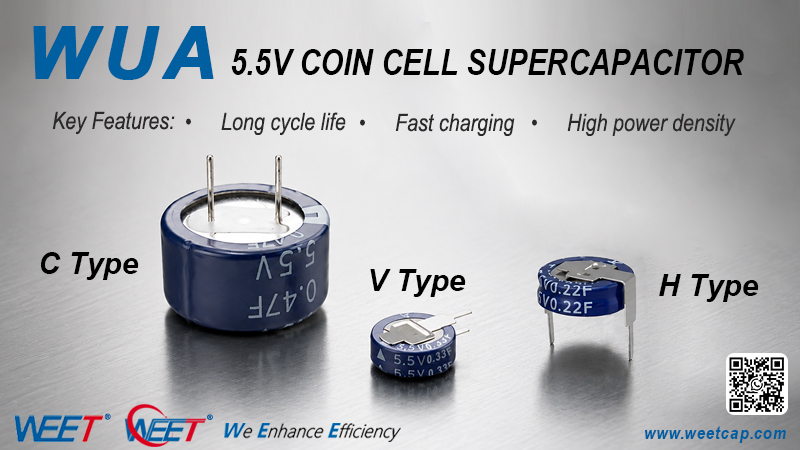
WUA 5.5V Coin Cell Supercapacitor is a compact energy storage device designed to store and quickly release electrical energy. With its small coin-cell form factor, it is suitable for electronic devices where space is limited and reliable short-term backup power is required.
Key Features of a WUA 5.5V Coin Cell Supercapacitor
A 5.5V Coin Cell Supercapacitor combines compact size with efficient energy storage.
Key features include:
5.5V 1.5F type supercapacitor is one of the most popular products.
Compact coin-cell design for space-limited equipment
Fast charging and discharging for quick energy delivery
Long cycle life compared with conventional batteries
Low maintenance and reliable performance
High power density for short-term energy backup
Applications of WUA 5.5V Coin Cell Supercapacitors
5.5V Coin Cell Supercapacitors can be used in a wide range of electronic devices and systems.
Typical applications include:
Memory backup
RTC backup power
IoT devices
Smart meters
Industrial control systems
Wireless and portable electronics
Short-term power backup
How to Choose a 5.5V Coin Cell Supercapacitor?
When selecting a 5.5V Coin Cell Supercapacitor, several factors should be considered:
Voltage: Make sure the rated voltage meets the requirements of your circuit.
Capacitance: Choose the appropriate capacitance according to the required backup time and energy storage.
Size: Check the diameter, height, and terminal design to ensure proper installation. WEET has 3 types, C types, H types, V types.
Cycle Life: For applications requiring frequent charging and discharging, a long cycle life is especially important.
Operating Temperature: Select a product that can operate reliably within your equipment's temperature range. WEET WUA: -25~+70℃
How to Choose a Professional Coin Cell Supercapacitor Factory?
A qualified factory should offer:
Stable and consistent product quality
Customized specifications for OEM applications
Professional technical support, strict quality control
Reliable production and delivery
At WEET, we focus on providing reliable supercapacitor solutions for different electronic applications. Our professional manufacturing capabilities and product experience help customers select suitable supercapacitors for their specific requirements.
Conclusion
WEET WUA 5.5V Coin Cell Supercapacitor is a compact and reliable solution for short-term energy storage and backup power. Its fast charging, long cycle life, and small size make it suitable for many modern electronic applications.
WEE Technology Company Limited Published On Aug 28, 2026
What Are WUB Combined Type Supercapacitors?
A WUB Combined Type Supercapacitor is a high-voltage super capacitor solution designed by integrating two individual super capacitor cells connected in series.
WUB Dual Cell Super Capacitor Structure
1. Two Individual Cells Connected in Series
The WUB series adopts a dual-cell structure, with two individual super capacitor cells connected in series.
Two cells connected in series
Higher voltage output
Suitable for 5V and higher voltage circuits
2. Compact Combined Design
As a type of Combined Type Supercapacitor, the WUB series integrates two cells into one compact package.
Advantages:
Integrated structure
Saves PCB space
Easier installation
Better consistency between cells
Before selecting a suitable WUB model, it is important to understand the difference between single-cell and dual-cell super capacitors.
You can learn more from our comparison article: WUD Single Cell VS WUB Dual Cell Super Capacitor: Which One Should You Choose?
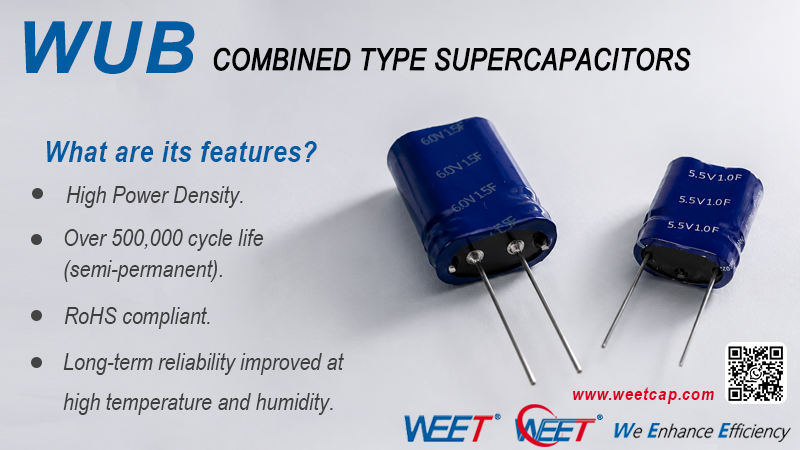
WEET provides two types of WUB Combined Type Supercapacitors, as shown in the figure below.
1. WUB 6V 1.5F, 16.5*8.5*22mm, Pitch 5mm Inner pin type
Replacement for: VINATech 6.0V 1.5F (0820) 2 SERIAL MODULE I TYPE, PN: WEC6R0155QG
2. WUB 5.5V 1.0F Super Capacitor
Features:
High Power Density
Over 500,000 cycle life (semi-permanent)
2 units serially connected to provide 6.0V products
RoHS compliant
Long-term reliability improved at high temperature and humidity.
Applications of WUB Super Capacitor
Backup Power Applications
RAM backup
Smart meter
Security equipment
Communication devices
Industrial Applications
PLC systems
Automation equipment
Control systems
Energy Storage Applications
UPS
Solar systems
Emergency power
Conclusion
WEET WUB Combined Type Supercapacitors provide a reliable high-voltage energy storage solution with 5.5V, 6V, and other customized rated voltage options available upon request.
WEE Technology Company Limited Published On Aug 21, 2026
What Is a Radial Type Super Capacitor?
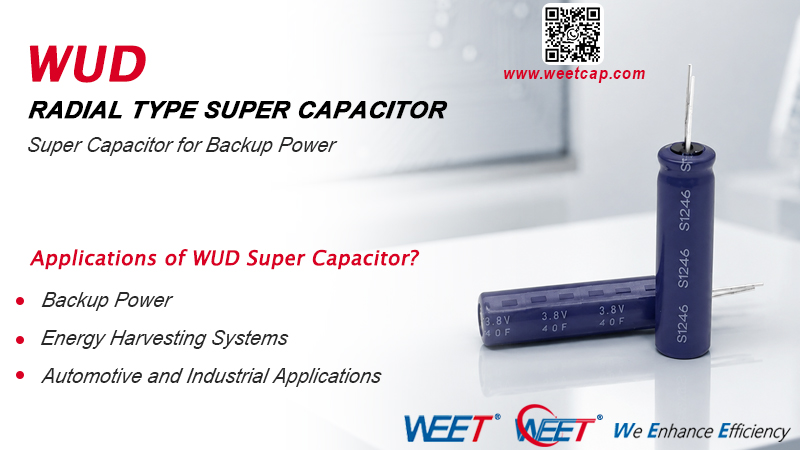
WEET WUD Radial Type Super Capacitor is an electric double-layer capacitor with radial lead terminals, designed for easy PCB mounting and reliable energy storage.
WUD Radial Super Capacitor Construction and Working Principle
A radial super capacitor mainly consists of activated carbon electrodes, electrolyte, separator, and radial lead terminals.
Electric Double Layer
Unlike batteries that store energy through chemical reactions, super capacitors store energy through the electric double layer formed between the electrode and electrolyte interface.
This physical energy storage method enables faster charging speed and longer operating life.
Separator
The separator prevents direct contact between the positive and negative electrodes while allowing ions to move through, ensuring safe and stable operation.
Why Choose WEET WUD Radial Type Super Capacitor?
Long Cycle Life
Radial super capacitors can achieve millions of charge and discharge cycles, significantly reducing replacement frequency compared with batteries.
Fast Charging and Discharging
With low ESR characteristics, they can quickly absorb and release energy, making them suitable for high-power applications.
High Power Density
They can provide instant power support for systems requiring short-term energy supply.
Maintenance-Free Operation
The long service life and stable performance make radial super capacitors a reliable energy storage solution.
Applications of WEET WUD Radial Type Super Capacitor
Super Capacitor for Backup Power
One of the key applications of radial super capacitors is backup power.
A Super Capacitor for Backup Power can provide temporary energy support for:
RTC backup
Memory backup
Industrial controllers
Emergency power systems
Energy Harvesting Systems
Radial super capacitors are suitable for storing energy collected from renewable and low-power sources, such as:
Solar energy systems
Wireless sensor nodes
Automotive and Industrial Applications
Due to their high reliability and long cycle life, radial super capacitors are used in:
Start-stop systems
PLC systems
Automation equipment
Electronic control systems
How to Select a Radial Type Super Capacitor?
When selecting a super capacitor solution, it is also important to understand the differences between single-cell and dual-cell designs.
For more details, please refer to our article: WUD Single Cell VS WUB Dual Cell Super Capacitor: Which One Should You Choose?
Capacitance
Common capacitance ranges include 0.1F to 100F. Higher capacitance provides greater energy storage capacity.
Rated Voltage
Common voltage ratings include: 2.5V~3.8V
Operating Temperature
Typical operating temperature ranges:
-20℃ to +65℃
-20℃ to +85℃ (3.5V)
Conclusion
WEET WUD Radial Type Super Capacitor combines high power density, fast charging capability, and long cycle life, making it an ideal solution for modern electronic applications.
From backup power systems to industrial equipment and automotive electronics, radial super capacitors provide reliable and efficient energy storage performance.
WEE Technology Company Limited Published On Aug 14, 2026